


Drastic newsletter July 2026
15 July 2026
Welcome to the summer 2026 edition of the Drastic project newsletter.
It’s been an exciting time of growth and development for Drastic, as it progresses through its penultimate year, continuing to propel varied and innovative solutions to reduce whole life carbon and the climate impact of European construction.
Recent months have seen partners convening at the project’s General Assembly in Estonia, joining the newly established and fast developing CircHub EU cluster, and conducting dynamic and informative training sessions, workshops, and webinars that demonstrate Drastic’s drive and ambition towards scaling robust European circular solutions across the built environment.
Working with 23 partners across eight European countries, Drastic continues to show how its five Demonstrators, combined with improved circular business models, can pave the way towards a whole-life cycle decarbonisation of EU building stock by 2050.
Visit the Project website to learn more about the project and its partners.

Latest news
Partners gathered in Tallin, Estonia, for Drastic's General Assembly
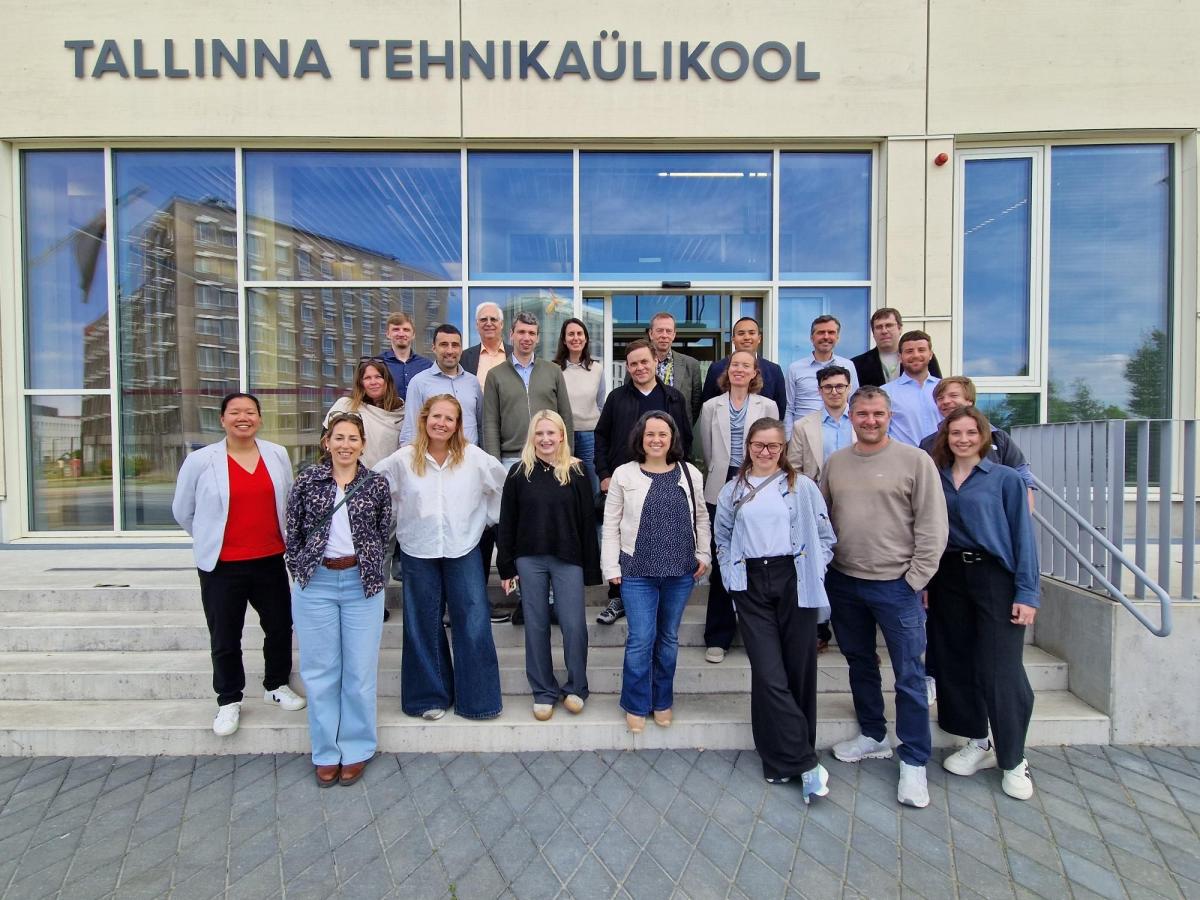
Project partners gathered outside the Tallinn University of Technology in Tallinn, Estonia.
In June, the Drastic consortium gathered in Tallinn, Estonia, for its fifth General Assembly, hosted by project partner, Tallinn University of Technology (TalTech).
One message clearly resonated throughout the assembly; accelerating the transition to circular construction will require practical innovation, supportive policy and regulatory frameworks, and business models that make circular solutions economically viable.
Key discussion topics included:
- extending product reuse across multiple life cycles and exploring the conditions needed to support long-term circularity.
- advancing assessment frameworks and product data approaches to support circular decision-making.
- sharing achievements, lessons learned and challenges from Drastic's five Demonstrators.
- examining the barriers and enablers shaping the circular transition, from business models to stakeholder collaboration.
- exploring the role of Digital Product Passports and traceability systems in supporting material reuse and transparency across construction value chains.
A hands-on co-creation workshop was also delivered alongside the assembly, by Drastic’s Nordic Demonstrator (you can read more on the workshop below).
Read more about the General Assembly here.
Drastic joins cluster of European circularity projects
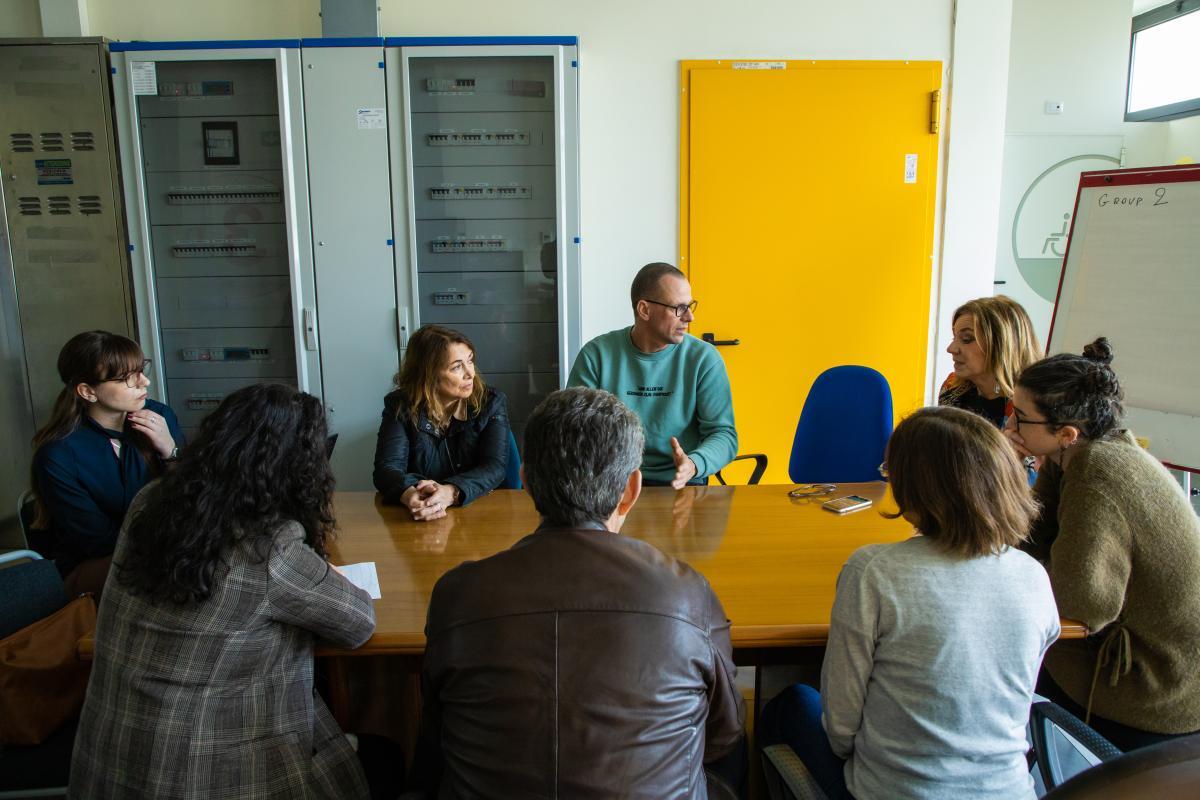
Discussions between participants during the latest CircHub workshop in Naples, Italy.
Drastic is delighted to announce that it has recently joined the CircHub cluster; a prominent emerging network of European Union (EU)-funded projects, each with a united vision of increasing circularity and decarbonisation within the built environment.
The cluster supports knowledge exchange, collaboration, and the wider uptake of innovative solutions for construction and renovation.
The initiative brings together partners working across a range of areas, including bio-based materials, circular construction methods, renovation strategies, and resource-efficient technologies, creating opportunities to share expertise and strengthen the collective impact of EU-funded research.
Already, the cluster has held a collaborative workshop on sustainable & energy-efficient building materials in Naples, Italy (March 2026), with plans for further webinars and joint activities in the coming year.
Learn more about the CircHub Network here.
Read about CircHub's latest sustainability workshop in Naples, Italy.

Meet the Demonstator
Meet the Demonstrator: Norway
Led by project partners Omtre, Produktif and Tallinn University of Technology (TalTech), Drastic's Nordic Demonstrator aims to:
- explore and demonstrate the use of reclaimed timber for innovative purposes in temporary commercial buildings.
- extend the lifespan of timber within the European construction industry.
- advance wood grading standards in Norway and Europe.
These physical processes will also connect with digital project solutions, aiming to streamline sustainability assessments, diagnosis and quality checks, and traceability over multiple (re)use cycles.
In 2025, reclaimed wood from abandoned Norwegian barns was harvested, graded, and tagged for the construction of a tool shed in Hønefoss, Norway. This shed will stand for at least a year, after which it will be dismantled, and the materials will be stored for future reuse.
This Demonstrator aims to show that with the right approach, people, and integration, reclaimed timber can have multiple lives and create many new beginnings.
Learn more about Drastic’s Norwegian Demonstrator.

Recent project activities
French Demonstrator reaches two circular installation milestones
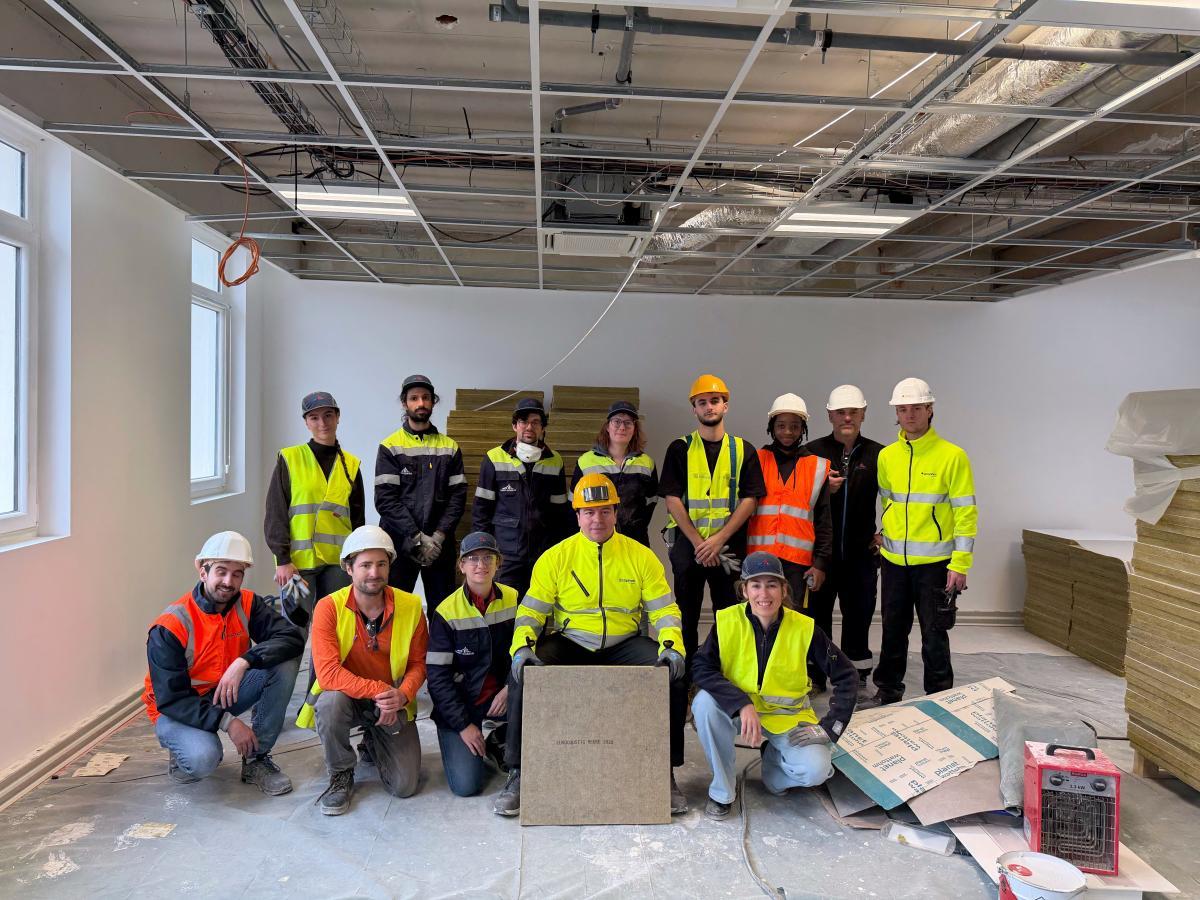
The French Demonstrator ceiling tile installation team in Aubervilliers, France.
Drastic's French Demonstrator has recently reached two significant project milestones, showcasing the potential of circular office refurbishments via the reinstallation of reused ceiling tiles and office partitions in two separate French locations.
In Aubervilliers, previously harvested used ceiling tiles were selectively processed, sorted, and then reinstalled into an office building, demonstrating how interior space plan products can be reused rather than landfilled.
At Clipper Coramine’s headquarters in Senlis, previously dismantled glass partitions, glass wool and plasterboards were refurbished, qualified and reinstalled, with additional harvested glass partitions repurposed into doors for a Clipper Coramine customer site in La Garenne Colombes.
Together, these installations demonstrate the feasibility of reuse-based business models for office refurbishments, helping to reduce waste, extend material lifecycles, increase circularity and support the European Union’s goal of achieving a carbon-neutral Europe by 2050.
Read more about the ceiling tile installations.
Read more about the partition installations.

Recent events
Spanish workshop on circular business models for steel & slag
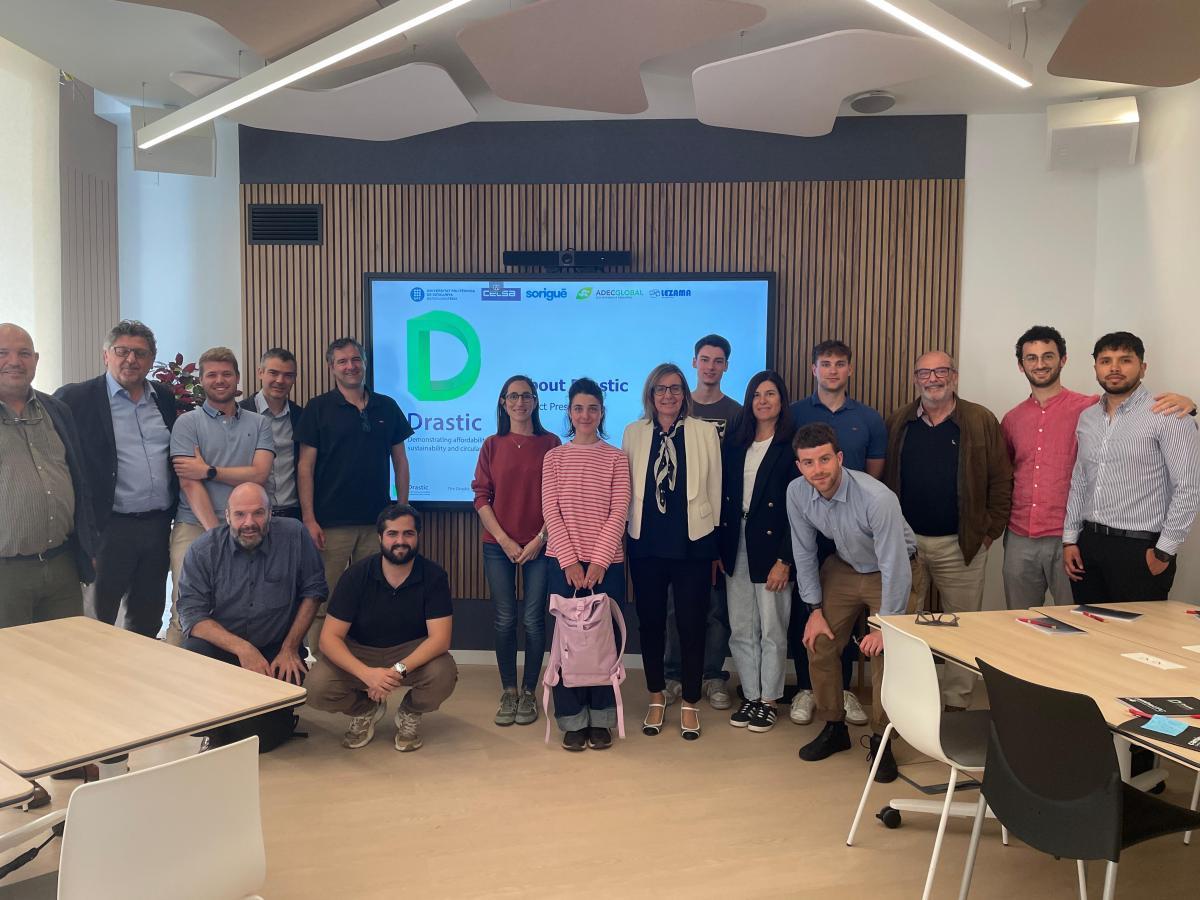
Attendees at the Spanish co-creation workshop in Barcelona, Spain.
On April 24th in Barcelona, Spain, the Escola de Camins (School of Civil Engineering) and Drastic partner Universitat Politècnica de Catalunya, hosted a dynamic co-creation workshop to design scalable circular business models for steel and slag reuse. Steel and slag are byproducts from the secondary steelmaking process, and a key focus for the Spanish demonstrator's work.
The session was facilitated by Hannah Lou Kings from fellow Drastic partner, Maastricht Sustainability Institute, who guided participants through an engaging and collaborative design process.
By bringing together those who produce, build, and regulate, the Spanish Demonstrator is helping to ensure that the circular economy solutions developed in Drastic are not just theoretical, but ready for the market.
Read a full summary of the workshop here.
Design for reuse now: hands-on Nordic workshop in Tallin
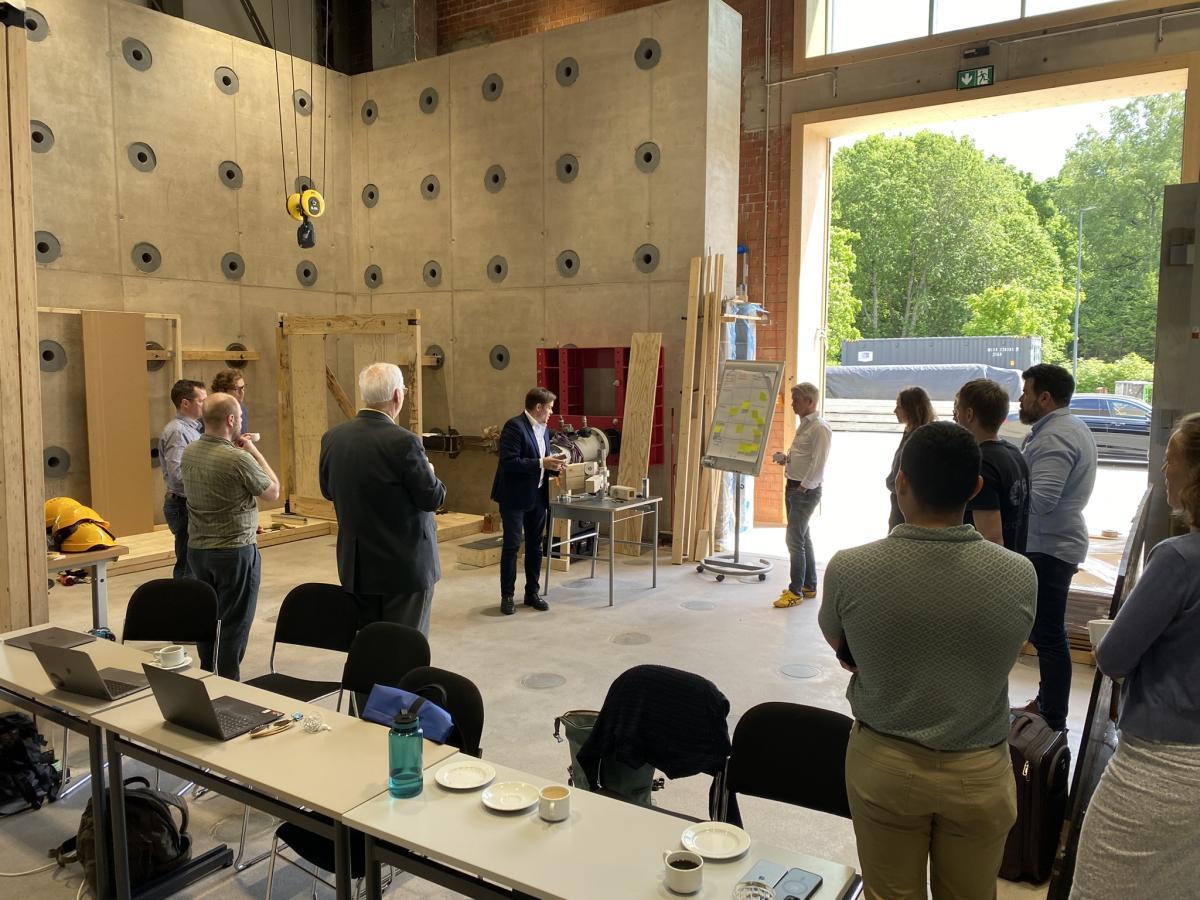
A practical demonstration delivered by Rune Kongshaug, Produktif, as part of the Nordic co-creation workshop.
On June 4, Drastic partners gathered at project partner TalTech’s campus in Tallinn, Estonia, for a co-creation workshop led by members of the project’s Nordic Demonstrator. The session was held in conjunction with the project’s fifth General Assembly meeting.
Hosted alongside fellow project partners Omtre and Produktif, and in collaboration with United Village Global (UVG) - Association, the workshop provided a valuable opportunity to connect Drastic innovations with real-world use cases and implementation pathways, while gathering feedback from early adopters and industry experts.
Participants explored topics including:
- parametric design and mass-customisation for circular construction.
- digital twins and lifecycle intelligence.
- design for assembly and disassembly (DfAD) scoring and circularity assessment methodologies.
- material passports, traceability and data integration.
- reclaimed timber systems and reuse workflows.
- distributed manufacturing and circular value chains.
Sincere thanks are extended to all workshop hosts and partners for their contributions to this event.
Read a full summary of the workshop here.
Three months of learning, innovation, and collaboration in industrial renovation
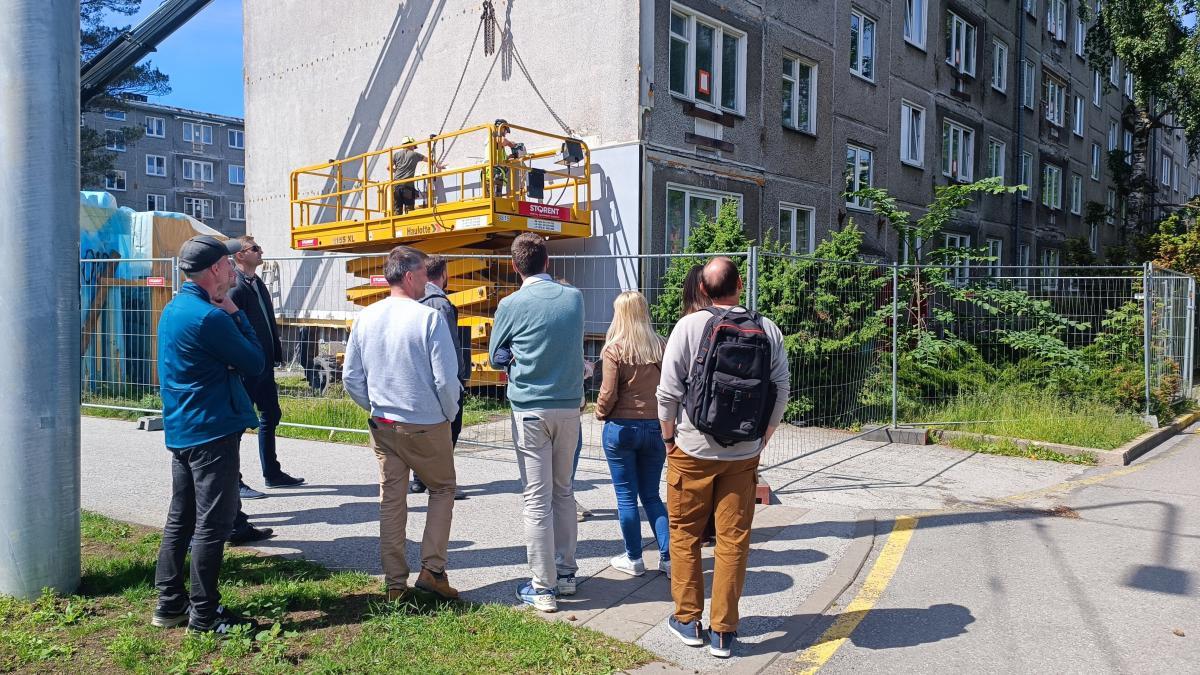
Attendees witness local building renovation works as part of the Estonian training series.
In June, Drastic's Estonian Demonstrator concluded a three-month training series focused on industrial renovation, hosted by project partners, TalTech and Timbeco.
The programme convened industry professionals to explore the technical, economic, and sustainability aspects of modern renovation projects.
Sustainability remained a central theme throughout, with sessions delivered on circular economy policies, practical circular renovation solutions, plus an interactive workshop that helped refine the circular renovation solution being developed by the Estonian Demonstrator.
The series concluded with factory and site visits, giving participants firsthand experience of innovative renovation solutions in action.
Drastic extends warm thanks to all involved whose knowledge, collaboration, and enthusiasm made the programme such a success.
Read a full summary of the workshop here.
Drastic webinar explores scaling of circular solutions
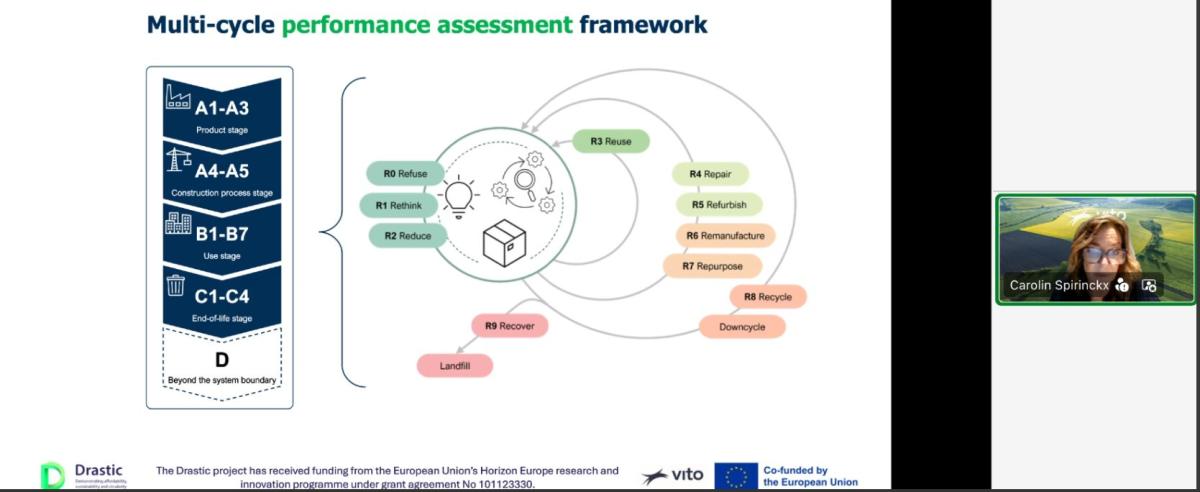
Carolin Spirinckx, VITO, presenting during the Drastic webinar
On March 11, Drastic explored how circular solutions could be scaled across the built environment value chain via its webinar; ‘Circularity in the built environment: From global vision to local action’.
Moderated by Giulia Carbonari, from Drastic partner, World Green Building Council (WorldGBC), the webinar highlighted that while circularity is widely recognised as essential for the built environment, the real challenge lies in its implementation.
Key highlights from the session included:
- insights shared by Smith Innovation from the Circular Buildings Coalition (CBC) Open Call.
- Carolin Spirinckx, from Drastic’s coordinating partner VITO, introduced how Drastic aims to test and advance circular construction across Europe.
- Fernanda Rocha, Irish Green Building Council, presented insights from the GBC’s roadmap.
- Dieter De Lathauwer, CEN/TC 350/ CEN/ CENELEC, shared updates from CEN / CENELEC’s work on sustainability standards for construction.
Drastic would like to warmly thank all speakers and participants for their contributions.
Learn more about the webinar here.