


CircHub Cluster leads workshop on sustainable & energy-efficient building materials in Naples, Italy
On 5 March 2026, Carolin Spirinckx, Project Manager at Drastic’s coordinating partner VITO, represented the Drastic Project as part of a workshop on sustainable & energy-efficient building materials in Naples, Italy at the Consiglio Nazionale delle Ricerche. The event opened with remarks from Dr. Nasko Terziev (SLU, BIOBUILD Scientific Coordinator), followed by a keynote from Keti Medarova-Bergstrom (European Research Executive Agency), highlighting the role of EU research in advancing circular construction.
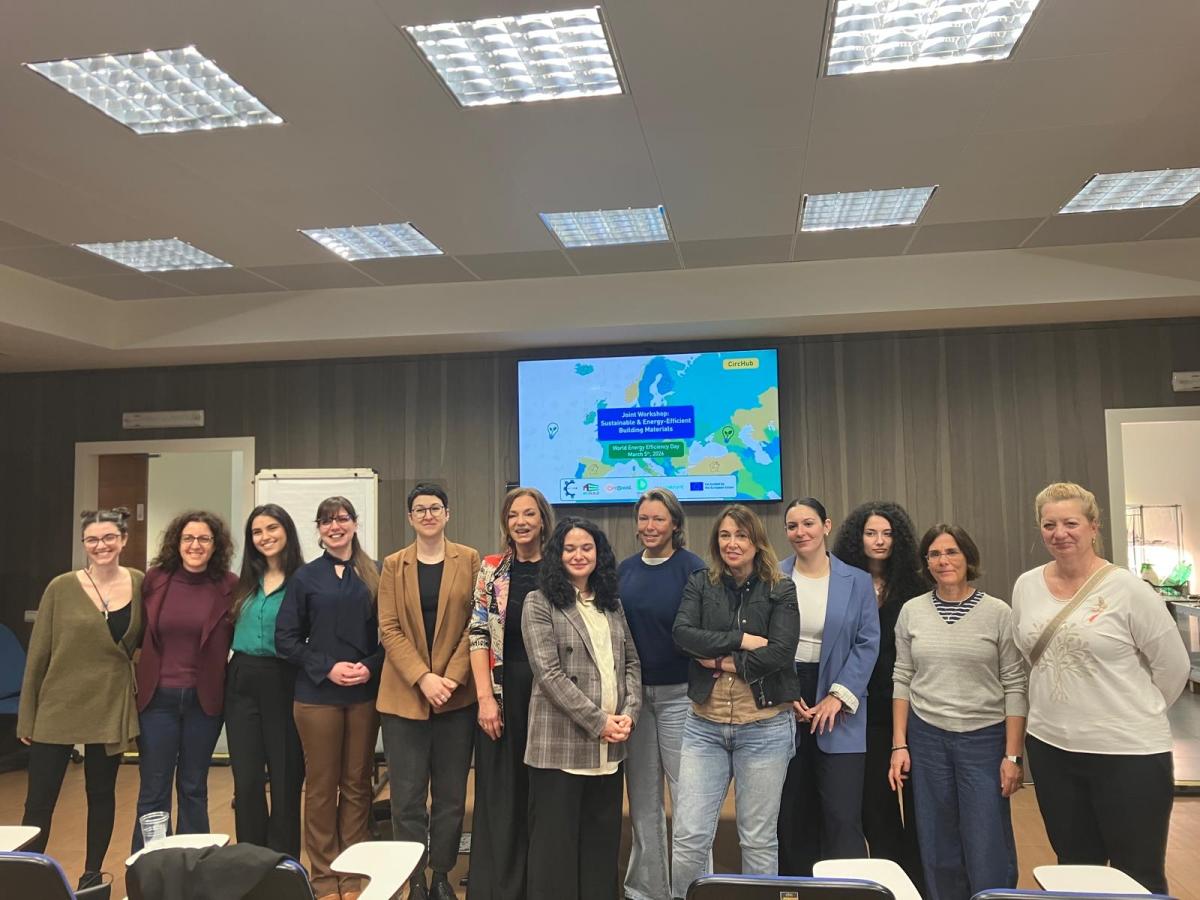
workshop participants for the CircHub cluster, held on 5 March 2026 in Naples Italy.
A collaborative cluster focused on circularity
The workshop was organised in collaboration with sister projects from the CircHub Cluster network, which Drastic was delighted to join earlier this year.
Alongside Drastic, the CircHub Cluster is comprised of fellow EU-funded projects BIOBUILD, CIRC-BOOST, RECONSTRUCT, and ATRIUM.
To kickstart the workshop, which spotlighted bio-based and circular solutions to accelerate the transition to a more sustainable built environment, CircHub cluster members gave presentations on how each CircHub project aims to influence the circular transition.
Contributions included technical insights and project presentations from:
BIOBUILD partners:
- Nasko Terziev (SLU)
- Emiliano Borri and Luisa F. Cabeza (University of Lleida)
- Giacomo Mele (Consiglio Nazionale delle Ricerche)
- Sebastian Gritsch (BOKU)
- Annalisa Moro (SQIM)
- Matthias Buyle and Rafael Alvarez Gutierrez (University of Antwerp)
Sister projects:
- RECONSTRUCT – Yasmine Zaki Abdelaziz (ICONS)
- CIRC-BOOST – Albert de la Fuente (UPC)
- ATRIUM – Aralda Torres (ENCO Srl)
- DRASTIC – Carolin Spirinckx (VITO)
Following the project presentations, participants discussed various topics related to sustainable & energy-efficient building materials during a ‘World Café’ session. The key takeaways from this session are highlighted below.
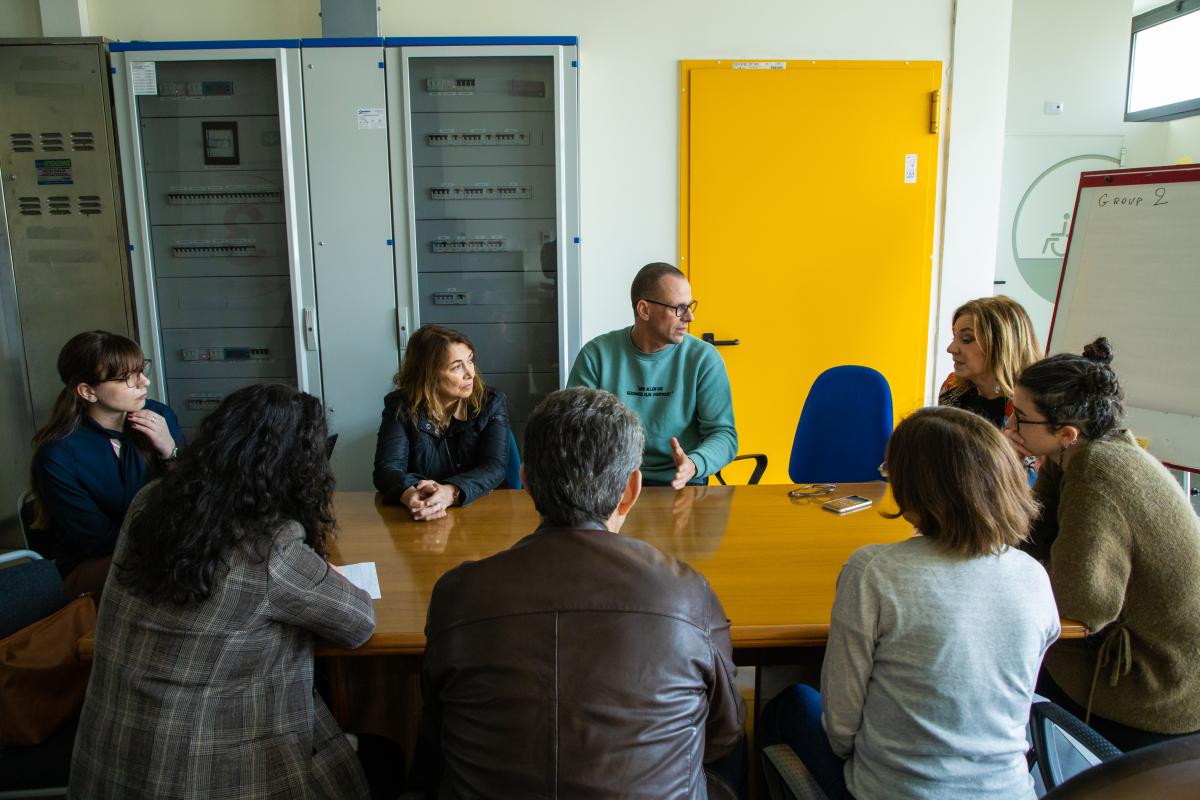
Discussions between participants during the CircHub workshop, 5 March 2026, Naples, Italy.
Lack of performance data can inhibit bio-based and circular materials uptake
Participants highlighted several promising materials being developed across the projects, including mycelium-based binders, lignin-based binders, plant oils binders and Polyhydroxyalkanoates (PHA)-based products. While these materials show strong potential in terms of sustainability and performance, their adoption remains limited due to the lack of available and reliable data demonstrating their performance at scale compared to conventional building materials.
Participants noted that improved measurement, testing and data sharing across projects and industry stakeholders will be essential to build trust and to enable wider market uptake of these products.
The challenge posed by alignment with regulations and market demand
It was also observed that many innovative materials and technologies are already in existence, however, their uptake is limited due to the lack of alignment with certification and market requirements, as well as with existing regulatory frameworks.
To facilitate market entry, clear business cases are needed to demonstrate how these materials can be integrated into current construction practices while meeting regulatory requirements and industry standards.
Bridging the gap between research, industry awareness, and market demand
The workshop highlighted that significant knowledge and innovations already exist in the construction sector, but they are often fragmented and not sufficiently communicated to industry stakeholders.
Many bio-based solutions are not widely known by designers, builders, and contractors, which limits their adoption. Strengthening knowledge transfer, communication, and integration between research projects and industry actors is therefore essential to accelerate implementation in construction projects.
Circularity throughout the building lifecycle
Participants discussed the pressing need for circularity to be integrated into the building and design process from the earliest stages of the building lifecycle. Strategies such as design for disassembly, modular construction approaches, and improved recovery and reuse of materials have the potential to significantly increase circularity within the built environment.
Lifecycle thinking is also essential, as the long-term environmental and economic benefits of sustainable materials are often overlooked when only upfront costs are considered.
Standardisation, harmonised materials data, and supportive market conditions are key circular enablers
Several structural barriers were identified via workshop discussions that continue to slow the adoption of circular and bio-based materials. These include the lack of harmonised materials data, limited standardisation frameworks, and insufficient communication about circular construction practices.
Additionally, procurement practices and business models within the construction industry remain largely based mostly on linear manufacturing and disposal systems, which can further hinder circular practice adoption. Participants suggested that policy incentives, improved data systems (such as potential EU material passports), and more supportive procurement frameworks could significantly accelerate the transition.
Policy Recommendations Emerging from the World Café Session
● Improve data generation and sharing on the performance and lifecycle impacts of bio-based and circular construction materials.
● Support harmonised EU frameworks, such as material passports or common construction data platforms.
● Encourage lifecycle-based procurement criteria that recognise long-term environmental and economic benefits.
● Strengthen knowledge transfer between research, industry and policymakers to accelerate the uptake of innovative materials.
● Promote circular design principles, including design for disassembly and reuse of materials.
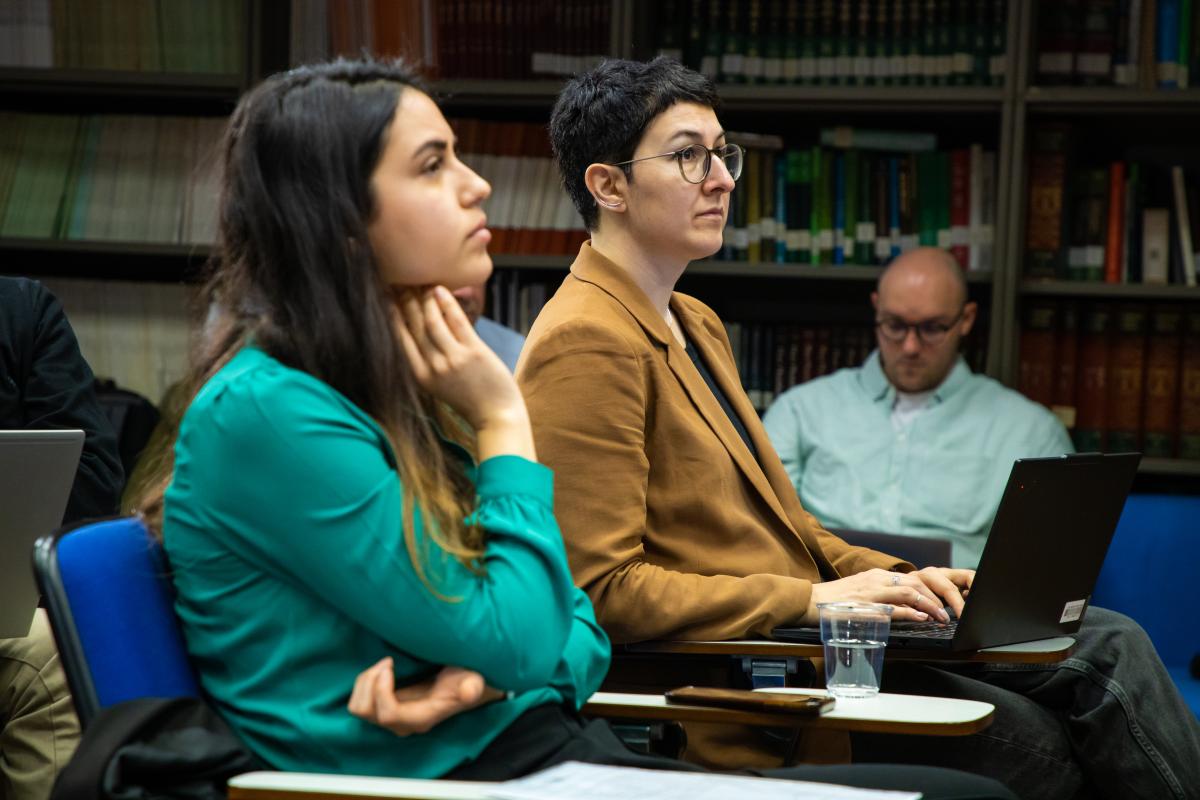
CircHub workshop 5 March 2026 in Naples, Italy.
Closing reflections
The workshop concluded with a collective reflections session, where key insights from the World Café discussions were shared with participants, followed by closing remarks reinforcing the importance of continued collaboration across the CircHub Cluster. The event closed with a networking lunch and exhibition space, providing further opportunities for exchange and future cooperation.
Sign up for the Drastic newsletter to be informed about any future CircHub events.